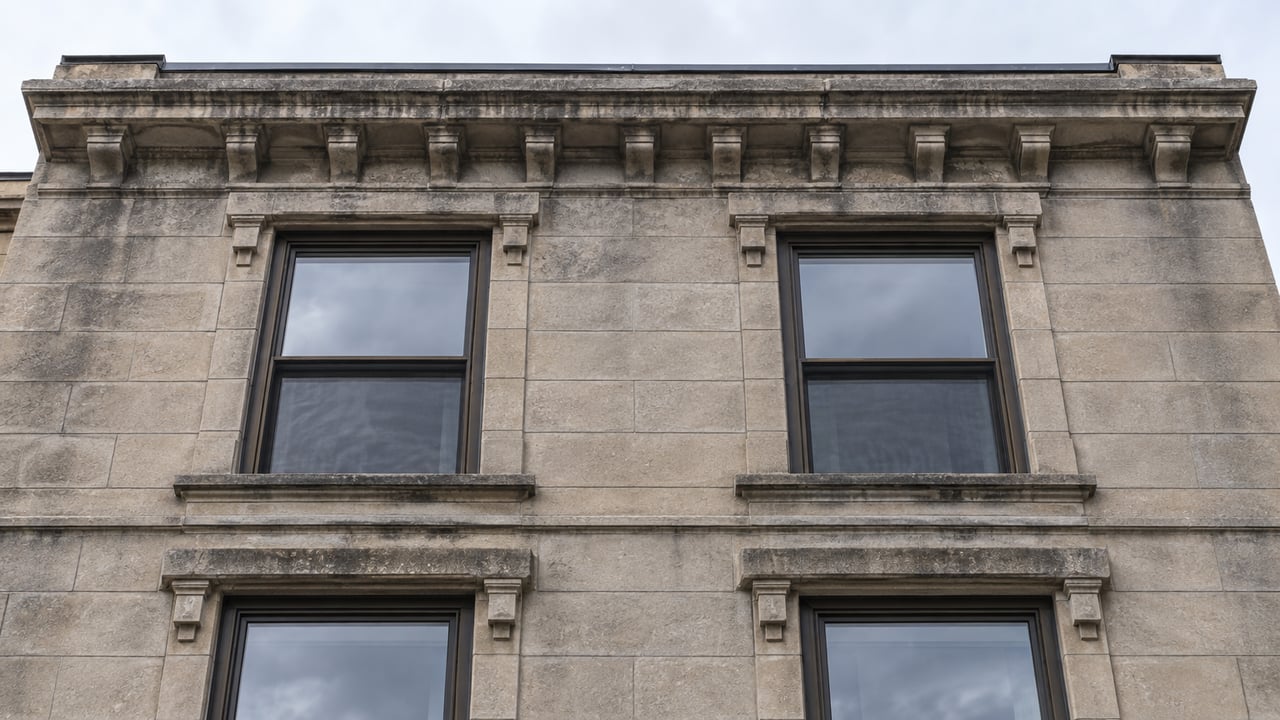
Two condos list at the same price in Lincoln Park this month. One sits in a full-amenity tower with a monthly assessment near $880. The other occupies a converted three-flat with an assessment closer to $250. The lower monthly assessment can look like savings, but it does not tell the whole story.
An August 2026 sample of active Chicago listings across Lincoln Park, Lakeview, Logan Square, River North, Streeterville, West Loop and South Loop put assessments on a 1,000-square-foot unit at roughly $330 a month in a walk-up, $520 in a loft, $880 in a full-amenity tower and $1,100 or more in new construction. Within that comp set, Lincoln Park carries the lowest average monthly assessments and the highest special-assessment volatility of any submarket sampled. Together, these figures make reserve funding an important part of comparing assessments.
What a Small Roof Actually Costs
A monthly assessment funds two things: day-to-day operating costs and a reserve fund for the big-ticket items that eventually fail, roofs, elevators, façades, boilers, risers. When the reserve fund is thin, the shortfall does not disappear. It arrives later as a special assessment, billed directly to owners in one or two payments rather than smoothed into a monthly line.
Scale changes everything about how that bill lands. A $40,000 roof replacement split across a three-unit building works out to about $13,000 per owner if there is no reserve cushion to absorb it. The same $40,000 project spread across a 60-unit building is a rounding error most owners never notice. A handful of larger buildings along the park, 2626 N Lakeview and 2800 N Lake Shore Drive among them, carry reserve balances and per-unit exposure that behave more like Gold Coast towers than like their smaller neighbors, simply because they have enough units to spread the cost.
A low monthly fee on a small building does not, by itself, indicate low risk; reserve funding and upcoming capital needs matter too.
How Lincoln Park's Building Stock Affects Condo Reserves
Lincoln Park's housing character leans heavily on vintage three- and four-flat buildings, greystones and red-brick walk-ups converted to condo ownership over the past several decades. Many of those conversions carried over original mechanical systems and roofs that are now well into or past their expected service life, in a building type that by definition has too few owners to absorb a major repair without feeling it individually.
That structural fact matters more right now because buyers have less room to slow down and read the fine print. North Side condo listings were down nearly 28 percent year over year as of recent reporting, with an estimated 10 to 15 active buyers competing for each available unit. A tight, competitive market rewards speed. Reserve disclosures reward patience. Those two pressures do not point the same direction, and a buyer who skips the reserve review to keep pace with a competing offer may face a five-figure assessment a year or two after closing.
Illinois Reserve Rules and the Proposed Disclosure Bill
Illinois law already requires condo boards to think about reserves. The Condominium Property Act directs boards to budget for "reasonable reserves for capital expenditures and deferred maintenance" and to weigh factors including the useful life and replacement cost of common elements. It does not require a professional reserve study to back up that judgment. A board can commission one, and many do, but the statute only says a board "may obtain" one, not that it must.
Annual budgets are supposed to close part of that gap. According to Solume, boards must state the association's current reserve balance and disclose whether reserves are funded according to a study. If no study exists, the board has to say so in the budget itself, which means a careful reader can spot a building with no reserve plan before ever asking a question out loud.
Springfield has a bill that would go further. HB2563 and its companion SB1703 would require associations to share their reserve study with a prospective buyer on request, on a five-year update cycle. That is the kind of disclosure buyers in small Lincoln Park buildings could actually use. It also exempts associations with 15 or fewer units from that specific requirement, while still holding them to the Act's general budgeting rules.
Lincoln Park's classic three- and four-flat conversions sit almost entirely under that 15-unit line, so the proposed disclosure requirement would not apply to many of these smaller associations.
What to Pull Before You Write an Offer
None of this means avoiding small buildings. It means reading the documents a small building is required to produce, before the offer, not during attorney review when leverage has already shifted.
- Request the seller's disclosure packet in writing under 765 ILCS 605/22.1. The board must furnish it within 10 business days of the request.
- Read the current annual budget for the explicit reserve-balance statement and the line disclosing whether reserves follow a study. If the board admits there is no study, that sentence is doing the work of a much longer conversation.
- Ask for special assessment history going back three years, not just whatever is pending today. One assessment can be an isolated repair. Two or three in a row is a funding pattern.
- Ask what share of the annual budget goes to reserves. Twenty to 30 percent is the range most guides treat as healthy for an association that is actually keeping pace with its buildings age.
- Check the HO-6 loss-assessment coverage on your own policy. Illinois' default limit is often just $1,000. Raising it to $10,000 to $25,000 typically costs $10 to $30 a year in premium and is the cheapest protection available against a shared repair bill.
What New Construction Buys You Instead
Small unit count is not automatically dangerous. It is the combination of small unit count, aging components and thin reserves that produces the exposure described above. A new boutique building sidesteps two of those three variables, at least for a while.
The six-unit building at 405 W Armitage Avenue, delivered by Barrett Homes with interiors by En Masse Interior Design and completed for move-in in mid-2026, is a useful comparison. It has the same small-building unit count as a converted three-flat down the street, which means the same thin pool of owners to split a future repair. But its roof, elevator and building envelope are new, which means the clock on major capital work has not started running yet. The risk in a small building is real, but it is a function of age and funding, not of unit count alone.
A Short FAQ
Does the 15-unit exemption mean small associations don't have to keep reserves at all? No. They remain subject to the Condominium Property Act's general reserve and budgeting requirements. The exemption only removes the specific requirement to share a formal reserve study with a buyer on request, should that bill pass.
Can a board just vote to skip reserve funding to keep monthly fees low? According to Altus Property Partners, owners can approve a two-thirds vote to waive the "reasonable reserves" requirement for a given year, and that waiver must be disclosed to all members. The underlying obligation to maintain reserves continues beyond that single year.
Is an HOA special assessment the same as the special assessment that sometimes shows up on a property tax bill? No. An HOA special assessment is levied by the condo association for building repairs. A municipal or county special assessment funds public work like sidewalks or sewers and attaches to the property tax record. They are unrelated charges that happen to share a name.
A condo's monthly fee is a starting point, not the whole answer. The reserve disclosure, the budget's own admission about whether a study exists and the special assessment history are what actually tell you what you are buying into. If you are comparing Lincoln Park buildings and want a second set of eyes on what the numbers in a condo's financial packet are really saying, Taylor Nirchi is happy to walk through it with you before you write the offer, not after.
This article is general information, not legal, tax or financial advice. Consult a qualified professional about your situation.