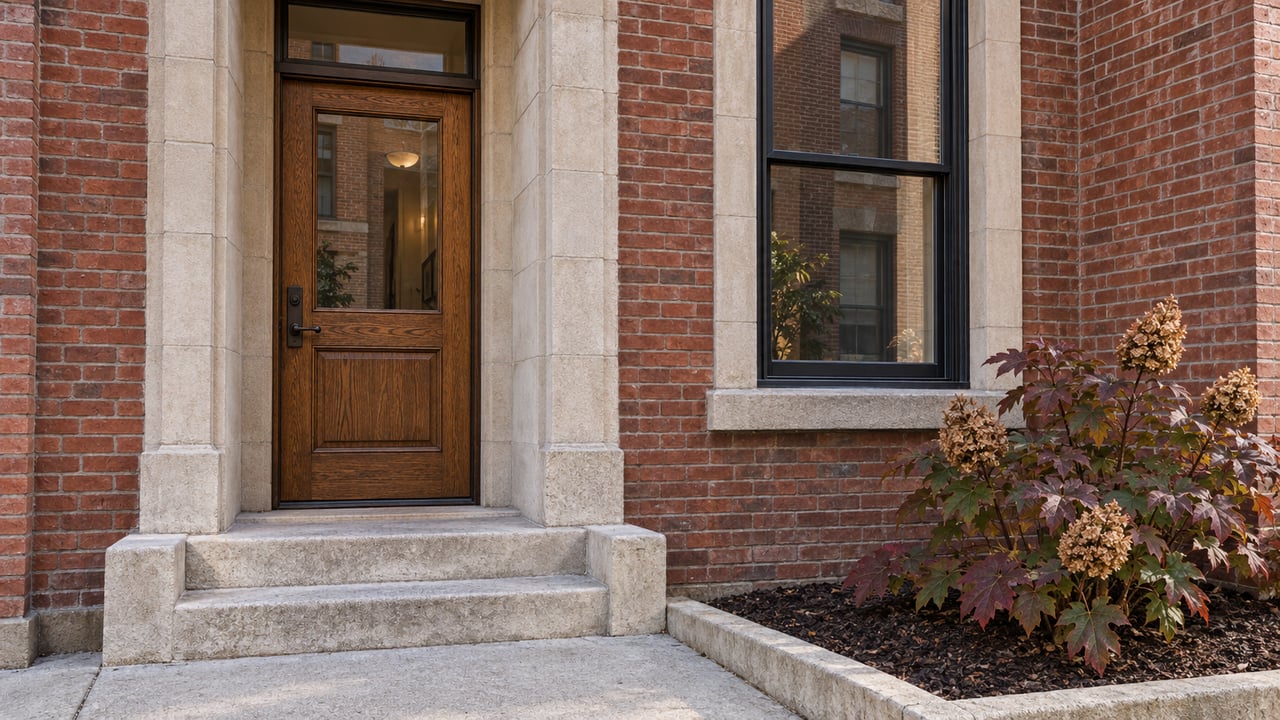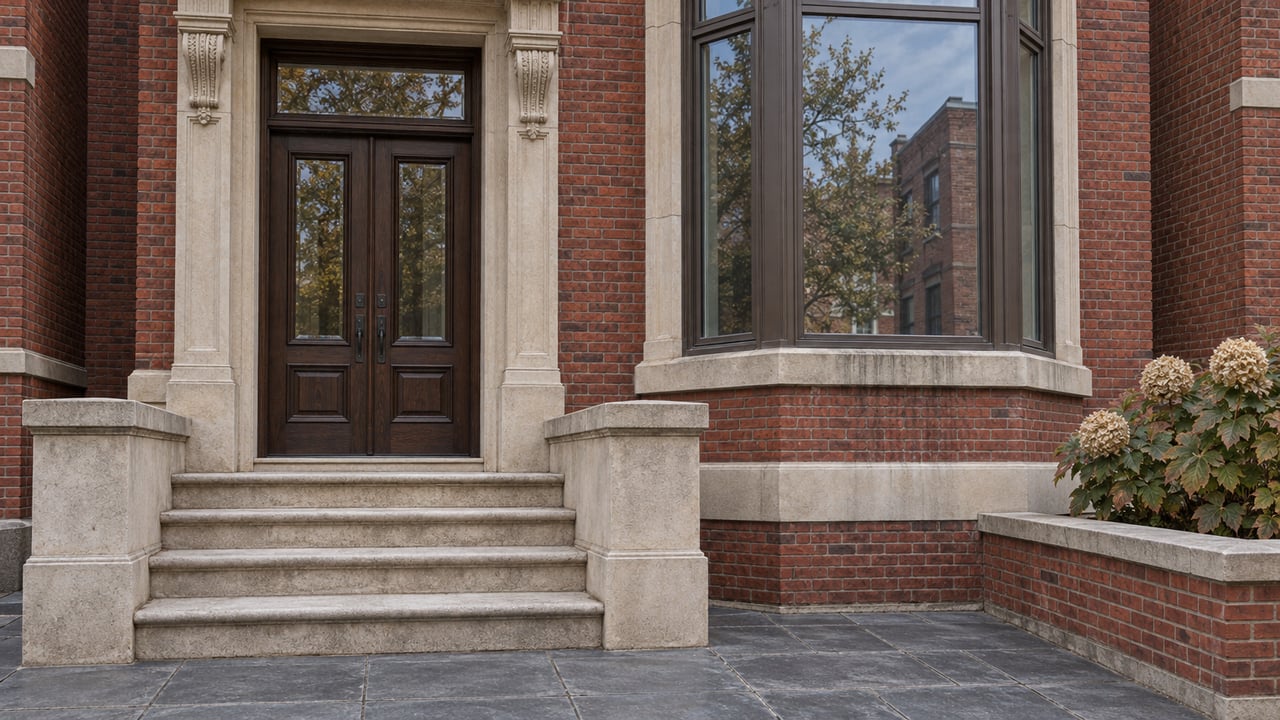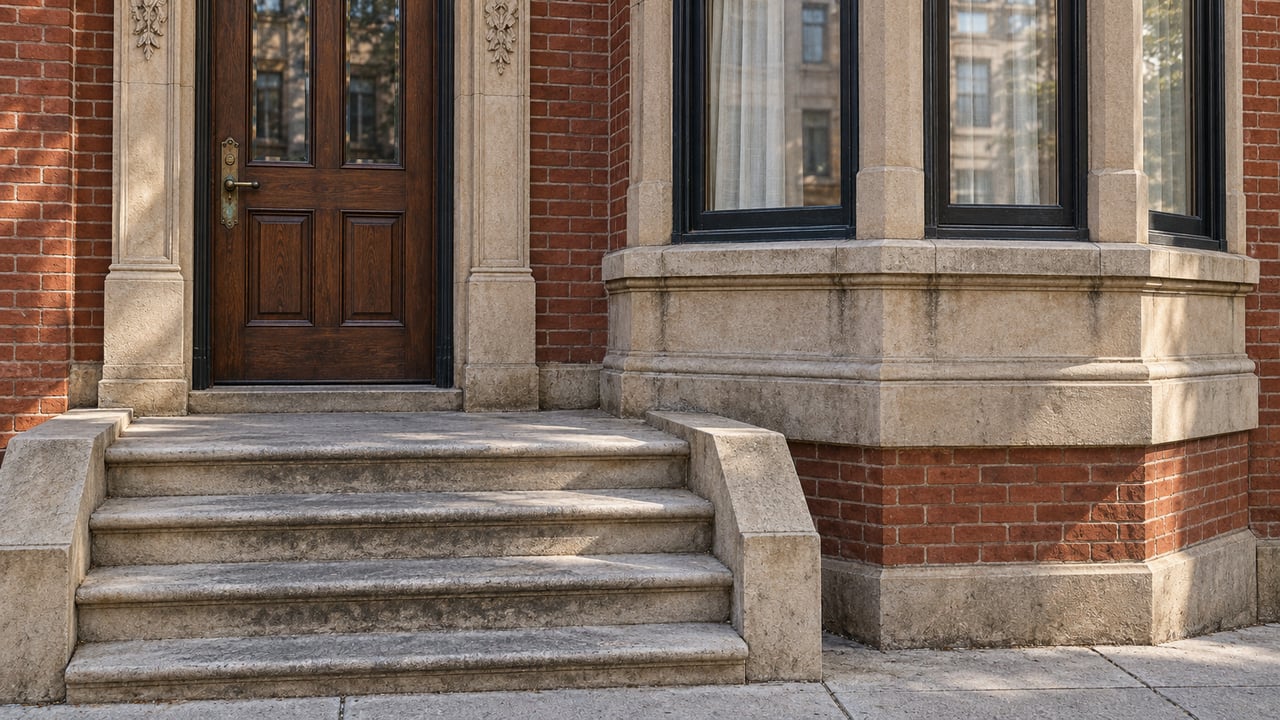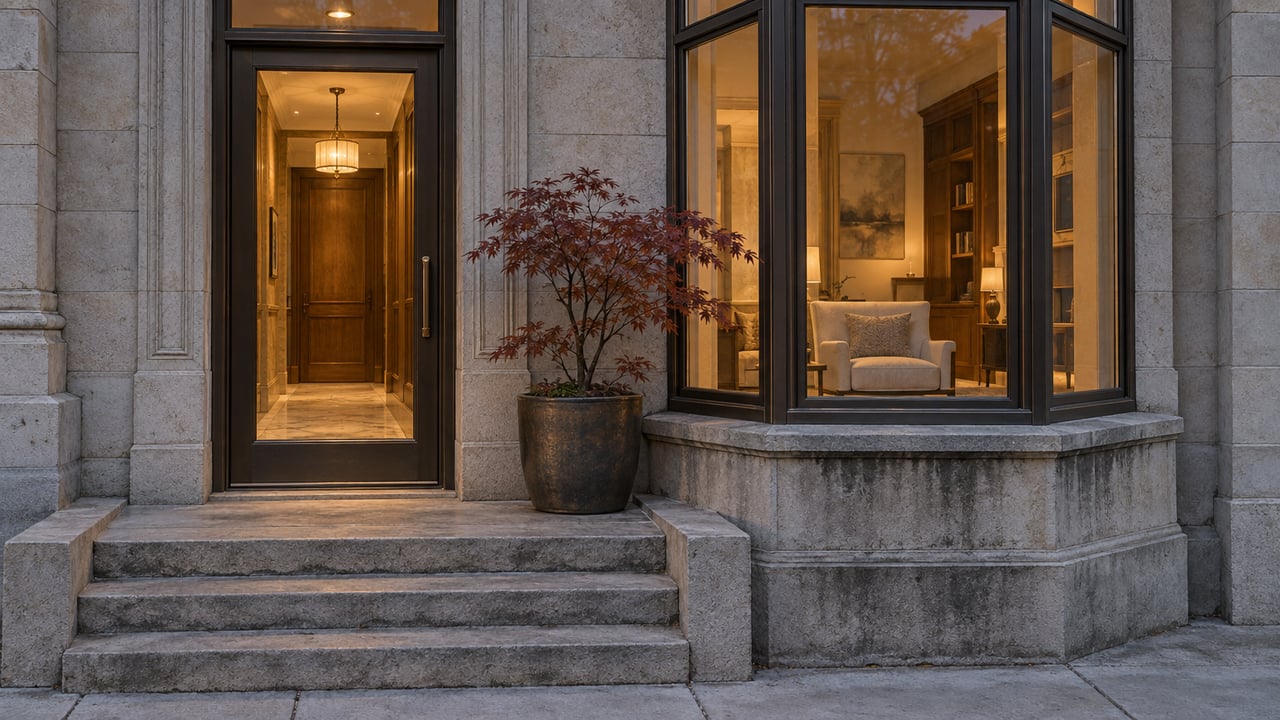
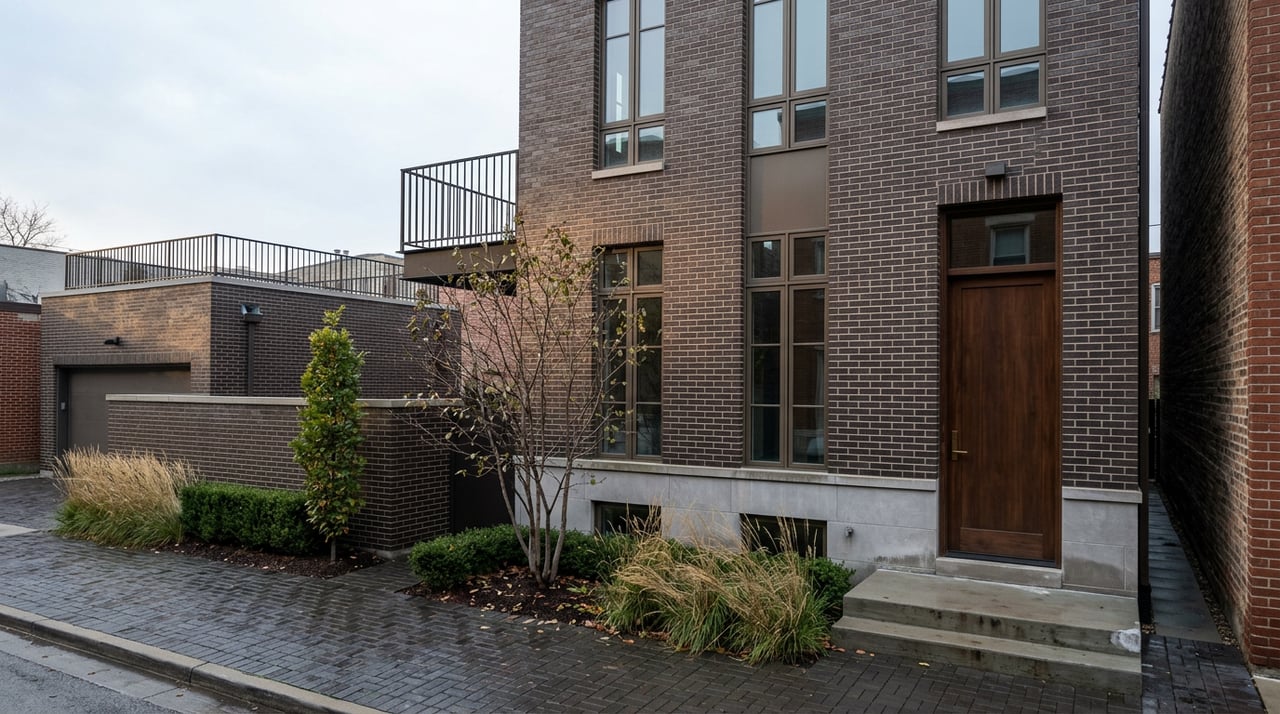
According to Chicago YIMBY, a single-family frame house at the corner of Armitage and Wood is coming down. The city approved the permit on January 12, 2026, clearing the way for a three-story building with a basement, a duplex-down unit and a duplex-up unit stacked above it. The plans call for a private rooftop deck, covered porches on the first and second floors, and a detached two-car garage off the alley that gets its own roof deck. It is a familiar Bucktown project, the kind you see going up on side streets across the neighborhood every year.
What makes it worth a second look is what the developer, an entity called 1801 W Armitage LLC, did not have to pay. If this same corner sat three blocks west in Logan Square, the demolition alone would trigger a surcharge of $20,000 per unit or $60,000 per building, whichever is higher, under the City of Chicago's Northwest Side Preservation Ordinance. In Bucktown, the surcharge does not apply. Not because the ordinance never reached this far east. Because in September 2024, the city redrew the map and left Bucktown off it.
A Fee That Used to Cover This Address
Chicago has regulated demolitions near The 606 since 2021. The Chicago Sun-Times reported that the original pilot program set a $15,000 surcharge for tearing down a house, townhouse, or two-flat, and $5,000 per unit for larger buildings. The Chicago Workers Cottage Initiative reports that it applied along the trail in Logan Square, Humboldt Park, Bucktown, and Wicker Park, alongside a parallel program in Pilsen. The idea was straightforward: raise the cost of replacing older, naturally occurring affordable housing with luxury single-family homes, and use the proceeds to fund preservation elsewhere.
That pilot got extended twice, then replaced. In September 2024, the City Council passed the Northwest Side Preservation Ordinance, which raised the surcharge to $20,000 per unit or $60,000 per building. According to Chicago Cityscape, the council also expanded what's now called the 606 Predominance of the Block District from roughly 1.7 square miles to about 6 square miles. But the expansion moved in one direction. The new boundary covers Avondale, Hermosa, Humboldt Park, Logan Square, and West Town. Bucktown and Wicker Park, both named in the 2021 version, are gone from the current one.
ATGF reports:
The 606 Predominance of the Block District is bounded by Addison Street, the North Branch of the Chicago River, Western Avenue, Division Street, California Avenue, North Avenue, Kedzie Avenue, Hirsch Street, Kostner Avenue, Fullerton Avenue, and Pulaski Road.
Trace that boundary on a map and Bucktown falls outside it entirely. The trail still runs through the neighborhood. The fee structure built to slow demolitions along it does not.
Why the Median Price Doesn't Describe Any One House
This matters for anyone reading Bucktown's median sale price and assuming it describes a typical home. It doesn't, and the gap between the number and the neighborhood has been widening.
As of March 2026, Bucktown's median sale price sat at $698,000, down 3.0 percent year over year, with homes selling in about 34 days compared to 50 the year before. On its own, that reads like a cooling market. But the median price per square foot told a different story: $466, up 23.1 percent over the same period. A falling median alongside a rising price per square foot is what happens when the mix of what's selling shifts, not when the underlying value of any given property drops.
Active listings show why. Recent single-family homes for sale in Bucktown have averaged roughly $1.78 million, driven by new construction and gut renovations on premium lots. Condos have averaged closer to $739,000, spanning everything from vintage timber lofts to new duplex-downs. Those two categories rarely compete for the same buyer, and lumping them into one median obscures both.
One brokerage's month-over-month tracking made the split even sharper. Comparing April 2026 to April 2025, overall home sales in Bucktown fell 48.6 percent in volume while the blended median dropped 18.7 percent, from $825,000 to roughly $671,000. But single-family house sales alone fell 70 percent in volume, and their median price rose 55.6 percent, from $1,378,500 to $2,145,000. Fewer houses sold, and the ones that did were considerably more expensive. That's not a soft market. That's a small, thin slice of very different inventory getting reported as one trend line.
The Teardown Math Behind the Split
The reason Bucktown keeps producing this two-tier inventory is that tearing down an older structure and replacing it remains, for now, cheaper here than it is a few blocks west. A parallel case study from Logan Square, tracked by the Chicago Workers Cottage Initiative, shows the mechanics clearly. Researchers followed 26 properties, sixteen worker's cottages and ten two-flats, sold between 2017 and 2020 and demolished shortly after. The cottages and two-flats sold for a median of $375,500 and $388,000. What replaced them: sixteen new single-family homes with a median sale price of $1,047,500, and ten small condo buildings whose 26 total units sold for a median of $576,500 each.
That is the same conversion happening on Bucktown's side streets right now, just without the added $20,000-per-unit toll a builder would face doing the identical project in Logan Square today. New construction condos in Bucktown follow a predictable format: two or three units per building, a duplex-up with a roof deck, a duplex-down with garage-top outdoor space, sometimes a simplex squeezed onto the middle floor. Walk any side street and the green construction fencing marking these projects is easy to spot.
What This Means If You're Comparing Neighborhoods
For a buyer weighing Bucktown against Logan Square or West Town on price alone, the ordinance boundary is a variable worth understanding before making an offer, not after.
If you're purchasing an existing two-flat or worker's cottage to live in as-is, the boundary line changes very little for you directly. But if you're buying with any intention of eventually redeveloping, adding a unit, or selling to a builder who will, the cost structure on either side of that line is not the same, and won't be until at least the ordinance's scheduled sunset at the end of 2029.
If you're a seller holding an older two-flat in Bucktown, that same absence of surcharge makes your property a cleaner sale to a developer than an equivalent building three blocks into the district, where a buyer has to factor in the fee.
If you're evaluating a lot for new construction, the fee exposure isn't the only thing that changed. Inside the redrawn district, two-flats are now allowed by right on standard RS-3 lots, a zoning change that doesn't extend to Bucktown. That cuts the other direction: it's a small incentive toward density that currently favors the neighborhoods with the higher teardown fee, not the ones without it.
None of this shows up when you filter listings by price or square footage on a portal search. It shows up when you check a specific parcel's zoning classification and cross-reference it against the current district map, which the city keeps updated on its own site.
A Short FAQ
Does the demolition surcharge affect me if I'm just buying a condo, not tearing anything down? Not directly. The surcharge applies at the point of demolition, so it affects a builder's cost basis on new construction, which in turn affects the price of the finished unit you're shopping.
Could Bucktown get added back into the district later? The current ordinance runs through December 31, 2029, with expansion having already happened once, in September 2024. Whether the boundary shifts again before then is a City Council decision, not something built into the current text.
I own a two-flat in Bucktown and want to convert it to a single-family home for my own use. Does any of this apply? The demolition surcharge is triggered by tearing the structure down. A conversion project is a different process with its own permitting requirements, worth confirming directly with the city's Department of Buildings before you start.
Does the boundary follow neighborhood names or actual property lines? The official boundary follows specific streets, not neighborhood branding, so a property's exact address determines whether it falls inside the district, regardless of what the surrounding area is commonly called.
Bucktown's housing stock is only going to keep splitting further between what's original and what's new as long as this cost gap persists. Whether that split works in your favor depends entirely on which side of the transaction you're on and how the specific parcel is zoned. If you're weighing a purchase, a sale, or a redevelopment project anywhere along the 606 corridor, Taylor Nirchi can walk through what a given address actually means under the current rules before you write an offer. Let's Connect.
This article is general information, not legal, tax or financial advice. Consult a qualified professional about your situation.